mardi 23 mars 2010

Ko Samui Island In Thailand


Ko Samui Island
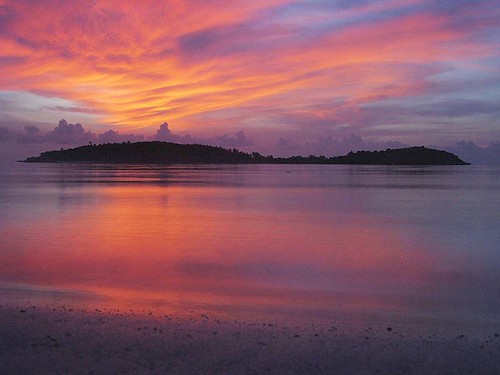
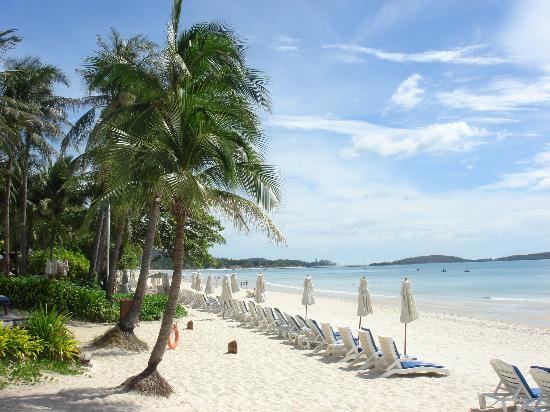
Ko Samui island of Surat Thani Province (or Koh Samui, Thai: เกาะสมุย), or often, simply Samui as it is referred to by locals, is an island off the east coast of the Kra Isthmus in Thailand, close to the mainland Surat Thani town. It is Thailand's third largest island, with an area of 228.7 km2 and a population of over 50,000 (2008). It is rich with natural resources, white sandy beaches, coral reefs and coconut trees.The island was probably first inhabited about 15 centuries ago, settled by fishermen from the Malay Peninsula and Southern China. It appears on Chinese maps dating back to 1687, under the name Pulo Cornam. The name Samui is mysterious in itself. Perhaps it is an extension of the name of one of the native trees, mui, or from the Chinese word Saboey, meaning "safe haven". Ko is the Thai word for "island."
Until the late 20th century, Ko Samui was an isolated self-sufficient community, having little connection with the mainland of Thailand. The island was even without roads until the early 1970s, and the 15 km journey from one side of the island to the other involved a whole-day trek through the mountainous central jungles.
Ko Samui has a population of about fifty-five thousand (source: Samui Mayor's Office) and is based primarily on a successful tourist industry, as well as exports of coconut and rubber. It even has its own international airport, Samui Airport, with flights daily to Bangkok and other major airports in Southeast Asia such as Hong Kong and Singapore. Whilst the island presents an unspoiled image to the public perception, economic growth has brought not only prosperity, but changes to the island's environment and culture, a source of conflict between local residents and migrants from other parts of Thailand and other countries. Reflecting Samui's growth as a tourist destination, the Cunard ship MS Queen Victoria (a 2000-plus passenger ship) docked at Samui during its 2008 world cruise.

Source : Wikipedia.com

lundi 22 mars 2010

Holbox Island In Mexican


Holbox Island
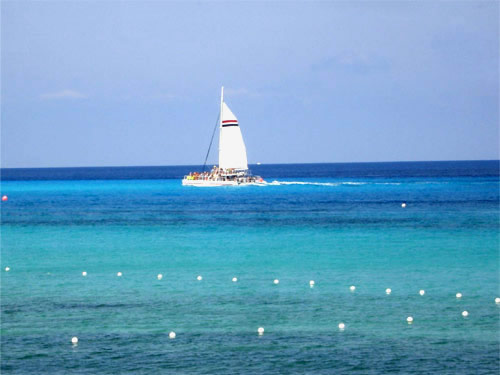
Holbox ("black hole" in Yucatec Maya) is an island in the Mexican state of Quintana Roo, located on the north coast of the Yucatán Peninsula. It is approximately 12 kilometers long and 1.5 kilometers wide, and separated from the mainland by a shallow lagoon that is home to flamingos, pelicans and other birdlife. It is part of the Municipality of Lázaro Cárdenas.
Not yet heavily touristed, the island's main industry is fishing. However, the island is developing a growing tourist industry in the form of whale shark viewing.
The island is accessed by ferry from the mainland town of Chiquila, and has virtually no cars, with transport by most residents and tourists by golf cart or moped. A small airline, Aerosaab, flies tours to Holbox from Cancún and Playa del Carmen; there is even a small airstrip to accommodate Aerosaab's five-seater Cessna aircraft.

Source : Wikipedia.com

dimanche 21 mars 2010

Lady Elliot Island In Australia


Lady Elliot Island
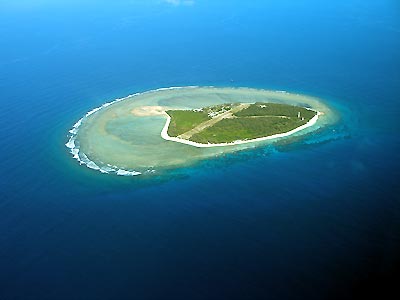
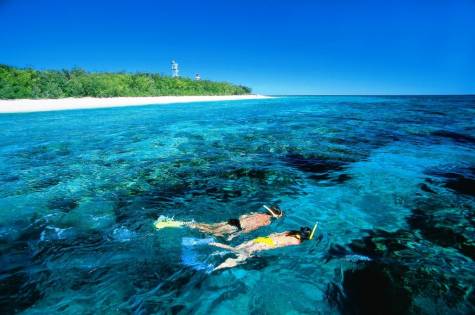
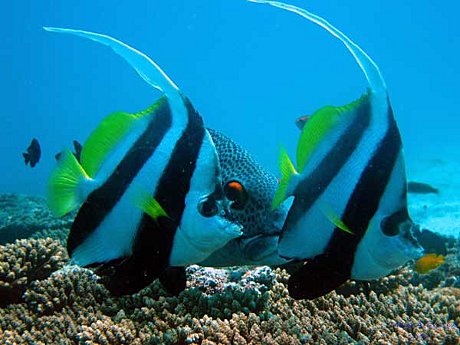
Lady Elliot Island is the southern-most coral cay of the Great Barrier Reef, Australia. The island lies 46 nautical miles (85 km; 53 mi) north-east of Bundaberg and covers an area of approximately 40 hectares (99 acres). The island is home to a small resort and airstrip, which is serviced daily by flights from Bundaberg, Hervey Bay, Maroochydore, Brisbane and the Gold Coast. Visitors to the resort can stay in a variety of accommodation, from suites to eco cabins. Activities on the island include reef walking, scuba diving, snorkelling and bird, turtle and whale watching. The island is particularly renowned for its scuba diving and snorkelling, as its location far offshore at the southern end of the Great Barrier Reef results in unrivalled water clarity.

Lady Elliot Island is an island resort on the Great Barrier Reef, and one of only three with direct flight access to the island airstrip. The island is located within the Great Barrier Reef Marine Park in the highest possible classification of Marine National Park Zone as designated by the Great Barrier Reef Marine Park Authority. Lady Elliot is an island teeming with life and live corals, famous for a transient population of up to 200 manta rays which form the iconic logo of the island's resort.

Source: Wikipedia.com